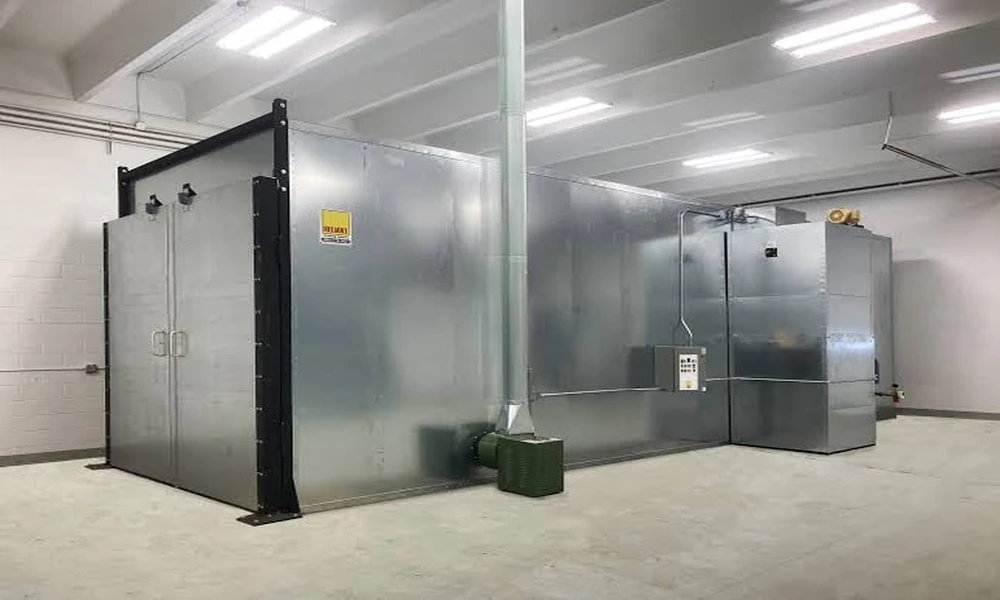

Finding the right oven gets easier once a shop stops comparing models by chamber size alone. Heat demand, part weight, loading method, utility capacity, and production pace can all rule out an oven that looks suitable on paper. Careful shortlisting keeps a manufacturer from paying for space it cannot use or buying a system that becomes the next bottleneck.
Start by Eliminating Ovens That Cannot Fit the Real Load
Dimensions should be checked against the complete loaded assembly, including carts, racks, hooks, and the clearance needed for heated air to move around the work. Capacity on a drawing means little if long frames scrape the doorway, tall fixtures interfere with the roof, or operators cannot position a loaded cart safely. Manufacturers reviewing Reliant powder coating equipment for sale can narrow the field quickly by measuring their largest recurring parts, normal rack footprint, turning space, and required service clearance. Clearance planning also helps powder coating equipment fit the building without stealing aisle space that fabrication, forklifts, or staging already depend on.
How Much Thermal Mass Will the Oven See Each Shift?
Thermal mass often separates two ovens that appear similar in size because thick steel, castings, and dense fixtures demand far more energy than light sheet metal. Dense loads absorb heat for longer periods, so burner capacity, circulation, and insulation need to match the weight entering the chamber rather than the empty oven volume. Profiling representative parts can show how long the slowest section takes to reach the powder manufacturer’s cure range, giving buyers useful numbers before they size Reliant powder coating ovens.
Operators should also compare the heaviest normal batch with the occasional extreme job. Recovery can suffer if every oven is selected around a rare oversized load, yet a chamber sized only for light work may force long cycles whenever thicker fabrications arrive. Selected Reliant powder curing ovens make more sense when the chosen capacity reflects the mix of loads the shop expects to run most often, with enough margin for realistic heavier work.
Door Design Can Matter as Much as Chamber Volume
Door configuration affects loading speed, heat loss, and whether awkward products can enter without excessive repositioning. Wide swing doors can suit large carts, while pass-through arrangements may help a shop maintain one-way material flow instead of backing hot racks into the same aisle used for incoming work. Buyers considering a Reliant industrial powder coating oven should therefore look at opening width, height, seal design, and the space doors occupy when open, not simply the chamber’s internal dimensions.
Match Recovery Performance to the Shop’s Loading Rhythm
Loading frequency changes what recovery performance means in practice. Repeated batches of cold metal can pull chamber temperature down several times per shift, and longer door-open periods make that drop more noticeable on large work. Shops with short takt times need an oven that can recover without forcing operators to build extra waiting time into the schedule. A Reliant powder coating oven for sale should be evaluated against expected batch weight, door-open time, and required cure throughput rather than a headline maximum temperature.
Fuel input alone does not tell the whole story because airflow and insulation determine how efficiently that heat reaches the load and stays inside the chamber. Gas-fired systems may suit higher-capacity production where fast convection and recovery are important, while other configurations may fit different facility constraints. Matching recovery to actual loading rhythm helps Reliant powder coating systems support production targets instead of making the oven a holding point between spraying and inspection.
Which Fuel and Utility Setup Fits the Facility Best?
Utility availability can remove otherwise attractive options from the shortlist. Gas service must support burner demand, electrical panels need capacity for fans and controls, and the building must accommodate exhaust, combustion air, and other installation requirements. Facilities comparing a Reliant powder coating equipment package should review these services early because utility upgrades can change project cost more than a small difference between oven models. Electrical and gas planning also prevents a new oven from arriving before the site can actually operate it.
Service Access Changes the Cost of Ownership
Controls, burners, circulation fans, probes, door hardware, and seals all need attention over the life of an oven. Placement that leaves those components trapped against a wall can turn simple maintenance into a longer shutdown. Accessible service points give technicians room to inspect, clean, adjust, and replace wear items without dismantling unrelated equipment.
Maintenance planning should include spare parts and realistic inspection intervals before production gets busy. Technicians can often catch declining fan performance, worn seals, or temperature-sensor issues before they create uneven cure or longer batch times. Installed Reliant powder coating equipment becomes more useful over time when the oven is positioned with enough access to keep routine service straightforward.
Leave Room for the Work the Shop Wants Next
Future work should influence the final choice without letting hypothetical jobs dictate an oversized purchase. Expansion may mean heavier assemblies, taller racks, more batches per shift, or a second coating line rather than simply larger parts. Reliant Finishing Systems can help manufacturers compare oven options around that next stage of production, whether the better fit is a larger batch oven, an equipment package that coordinates handling and curing, or a layout that leaves space for later capacity without forcing the shop to relocate the entire finishing area.