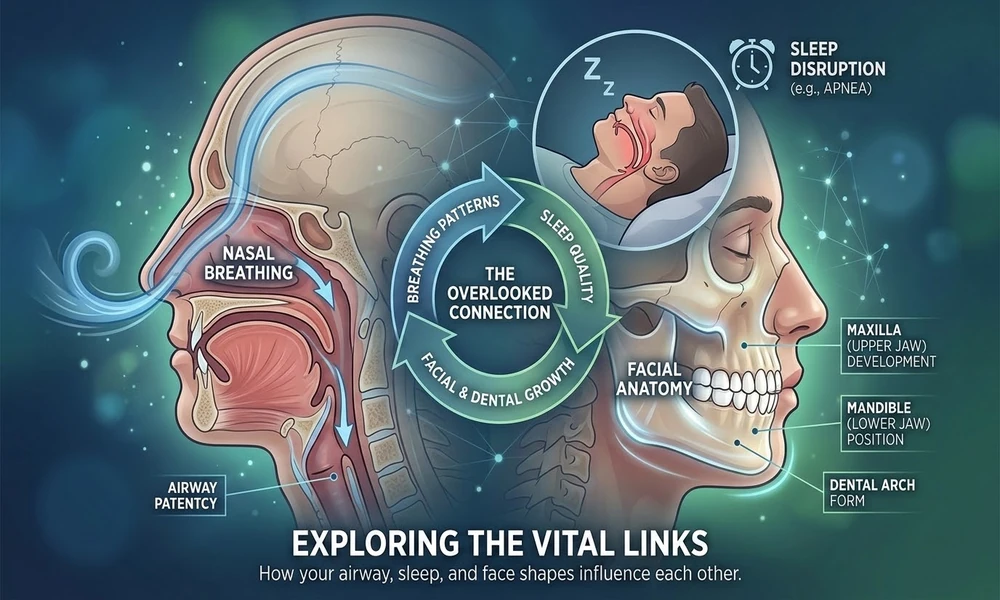

Breathing is one of the body’s most basic functions, but most people don’t think about it until something feels off. Maybe it becomes harder during exercise, illness, allergy season, or stressful moments. But the way air moves through the nose, throat, and upper airway can affect far more than comfort. It can shape sleep quality, energy, focus, mood, and overall health.
Sleep and breathing are closely connected. When airflow is restricted at night, the body may struggle to reach the deeper, more restorative stages of sleep. A person may spend enough hours in bed and still wake up tired, foggy, or irritable. Sometimes, the issue isn’t poor sleep habits. It may be tied to the structure of the nose, jaw, throat, or soft tissues that help keep the airway open.
Facial anatomy plays a bigger role in breathing than many people realize. The size and shape of the nasal passages, the position of the jaw, and the tone of the airway muscles can all influence how well the body gets oxygen, especially during sleep. Understanding this connection can help people recognize when fatigue, snoring, or restless sleep may be related to airway health.
Why Airway Health Matters Beyond Breathing
Airway health refers to how easily air moves from the nose and mouth into the lungs. When the airway is clear and stable, breathing usually feels natural and effortless. When it’s narrow, blocked, or prone to collapse during sleep, the body has to work harder to maintain healthy airflow.
That extra effort can affect the nervous system. Poor airflow may trigger brief awakenings throughout the night, even when the person doesn’t remember them. These interruptions can reduce sleep quality and keep the body in a low-grade stress state. Over time, this may contribute to daytime sleepiness, trouble concentrating, morning headaches, and reduced exercise tolerance.
Airway problems can also affect cardiovascular and metabolic health. Repeated drops in oxygen during sleep may place strain on the heart and blood vessels. They may also interfere with hormone regulation, appetite signals, and blood sugar balance. That’s why breathing problems during sleep shouldn’t be dismissed as simple snoring or a minor inconvenience.
The Nose as the Body’s Natural Air Filter
The nose is designed to warm, humidify, and filter air before it reaches the lungs. Nasal breathing also supports nitric oxide production, which helps blood vessels relax and supports oxygen delivery. When nasal breathing is easy, the body can often maintain a steadier breathing rhythm, especially during rest and sleep.
Nasal obstruction can happen for several reasons. A deviated septum, enlarged turbinates, nasal valve collapse, allergies, sinus inflammation, or a previous injury can all reduce airflow. Some people become used to mouth breathing without realizing their nasal passages aren’t working as well as they should. Others notice congestion mainly at night, when lying down makes the obstruction more obvious.
When nasal structure is a major factor, a specialist evaluation may be helpful. North Texas Facial Plastic Surgery, for example, provides information on functional rhinoplasty in Dallas. This type of nasal surgery focuses on improving airflow rather than changing appearance alone. It’s different from cosmetic-only procedures because the goal is to support breathing mechanics and nasal stability.
How Facial Anatomy Can Shape Sleep Quality
The face and upper airway develop together. The width of the nasal passages, the height of the palate, and the position of the jaw can all influence how easily air moves during sleep. A narrow upper jaw, recessed chin, or crowded oral cavity may reduce the space available for the tongue and soft tissues, especially once the body relaxes at night.
During sleep, muscle tone naturally decreases. That helps the body rest, but it can also make the airway more likely to narrow. If the tongue or soft palate falls backward, airflow may become restricted. The result can be snoring, shallow breathing, or repeated pauses in breathing. These events can fragment sleep and make it harder for the brain to stay in deeper sleep stages.
Not every person with fatigue or poor sleep has a structural airway issue. Stress, alcohol, medications, irregular schedules, and medical conditions can also affect sleep quality. Still, facial anatomy is an important part of the picture. When sleep problems continue despite good sleep habits, an airway evaluation may reveal factors that are easy to miss.
Snoring, Sleep Apnea, and Interrupted Recovery
Snoring happens when airflow causes tissues in the throat or nose to vibrate. Occasional snoring can happen with congestion or fatigue. But frequent, loud snoring may point to a more significant airway issue, especially when it comes with gasping, choking, pauses in breathing, or excessive daytime sleepiness.
Obstructive sleep apnea occurs when the airway repeatedly narrows or closes during sleep. These episodes can lower oxygen levels and prompt the brain to partially wake the body so breathing can resume. A person may not remember these awakenings, but the body still experiences them as disruptions. That can make sleep feel unrefreshing, even after seven or eight hours in bed.
An ENT doctor who treats sleep apnea and airway concerns can help identify whether nasal, throat, or structural issues are contributing to nighttime breathing problems. North Dallas ENT is one example of a provider focused on ENT evaluation, airway concerns, and sleep-related breathing issues. Diagnosis may involve a physical exam, nasal endoscopy, sleep study, symptom review, or medical history review.
The Link Between Poor Sleep and Daytime Energy
Energy isn’t only about motivation or caffeine intake. It depends heavily on sleep quality, oxygen delivery, hormone balance, and nervous system recovery. When breathing is disrupted during sleep, the body may spend the night responding to stress instead of repairing itself.
The signs can be subtle. Some people wake up with a dry mouth, sore throat, or headache. Others feel mentally slow, emotionally reactive, or unusually hungry during the day. Poor sleep can also reduce patience, lower workout performance, and make weight management harder. These symptoms are often blamed on aging, stress, or a busy lifestyle, but sleep-disordered breathing may also be part of the problem.
Restorative sleep supports memory, immune function, tissue repair, and hormone regulation. Deep sleep and REM sleep are especially important for physical and mental recovery. When airway problems repeatedly interrupt these stages, the effects can build gradually. Many people adapt to feeling tired and start to see it as their new normal.
Hormones, Breathing, and Men’s Health
Sleep and hormones are closely connected. Testosterone, growth hormone, cortisol, insulin, and thyroid-related processes can all be influenced by sleep quality. For men, poor sleep may affect energy, libido, muscle recovery, mood, and body composition. When breathing problems interrupt sleep, hormone patterns may become less stable.
That doesn’t mean every case of low energy is caused by sleep apnea or airway restriction. Nutrition, exercise, mental health, medications, and chronic illness can all contribute. But evaluating sleep and breathing can be an important step before assuming fatigue is only hormonal. Some people pursue supplements or medications while missing a deeper issue, like poor oxygen flow or fragmented sleep.
A men’s health center may look at energy from several angles, including lab work, lifestyle, sleep habits, and symptoms. EveresT Men’s Health, for example, is associated with energy optimization and men’s health services. From an educational standpoint, fatigue is often best understood through a wider lens rather than as one isolated concern.
Mouth Breathing and Its Long-Term Effects
Mouth breathing is common, especially during congestion, allergies, exercise, or sleep. Occasional mouth breathing usually isn’t a major concern. Chronic mouth breathing, though, may suggest that nasal airflow is limited or that the body has developed a habit of bypassing the nose.
At night, mouth breathing can dry out the mouth and throat. It may increase snoring, worsen bad breath, and contribute to restless sleep. In children, chronic mouth breathing may also affect facial growth, dental alignment, and palate development. In adults, it can keep a cycle of poor sleep, fatigue, and airway irritation going.
Addressing mouth breathing starts with finding the cause. Allergies, sinus inflammation, nasal obstruction, enlarged tonsils, and sleep apnea may all play a role. Treatment may involve allergy management, nasal breathing therapy, dental or orthodontic evaluation, ENT care, or sleep medicine. The right approach depends on the person’s anatomy, symptoms, and overall health.
Wellness, Recovery, and the Bigger Health Picture
Airway health is one part of a larger wellness picture. Breathing, sleep, nutrition, hormones, movement, stress, and recovery all influence one another. When one area is strained, the effects can show up elsewhere. Poor sleep, for example, can increase cravings, reduce exercise recovery, and make stress harder to manage.
Some wellness clinics focus on hormone support, healthy aging, and broader recovery concerns. Forever Young, referenced as fygulfcoast.com, is one example of a wellness and hormone support clinic. From an educational standpoint, symptoms like fatigue, low motivation, or poor recovery may need a full-body evaluation that includes sleep and breathing, not just lab testing.
A balanced approach avoids treating symptoms in isolation. Someone with low energy may benefit from checking sleep quality, nasal airflow, bloodwork, stress levels, and daily habits. Looking at these factors together can help reveal whether the main issue is hormonal, structural, behavioral, or a combination of several factors.
When to Seek Evaluation for Airway or Sleep Concerns
Many people delay evaluation because they assume snoring or tiredness is normal. But certain signs deserve attention, including loud snoring, waking up gasping, morning headaches, dry mouth, daytime sleepiness, trouble focusing, high blood pressure, and feeling tired despite enough time in bed.
It’s also worth seeking care if nasal breathing feels difficult on one or both sides, especially when the problem is long-term or worse during sleep. A history of nasal injury, chronic congestion, frequent sinus issues, or reliance on mouth breathing may point to a structural or inflammatory issue. In some cases, treating the nose can improve comfort and support better sleep, though it may not solve every sleep-related concern on its own.
Evaluation may involve several types of professionals, including primary care physicians, ENTs, sleep medicine specialists, dentists, orthodontists, or facial plastic surgeons with functional airway experience. The best starting point depends on the symptoms. What matters most is recognizing that breathing and sleep are not separate from overall health. They are central to how the body functions each day.
Final Thoughts
Breathing, sleep, and facial anatomy are deeply connected. The nose, jaw, throat, and soft tissues all help determine how easily air moves through the airway. When airflow is restricted, the effects may show up as snoring, fatigue, poor focus, headaches, low motivation, or reduced recovery.
Good sleep isn’t only about spending enough hours in bed. It’s about steady breathing, stable oxygen levels, and uninterrupted sleep cycles. If the airway is compromised, the body may struggle to repair and recharge, even when a person believes they’re getting enough rest.
Understanding this connection can help people take symptoms more seriously. Chronic tiredness, mouth breathing, and loud snoring shouldn’t be brushed aside as normal. By looking at airway health, nasal structure, sleep quality, and overall wellness together, it becomes easier to understand what the body needs to function with more energy and resilience.